
How to Restart Your Career After a Long Gap: Where to Begin
Ramseena4 min read

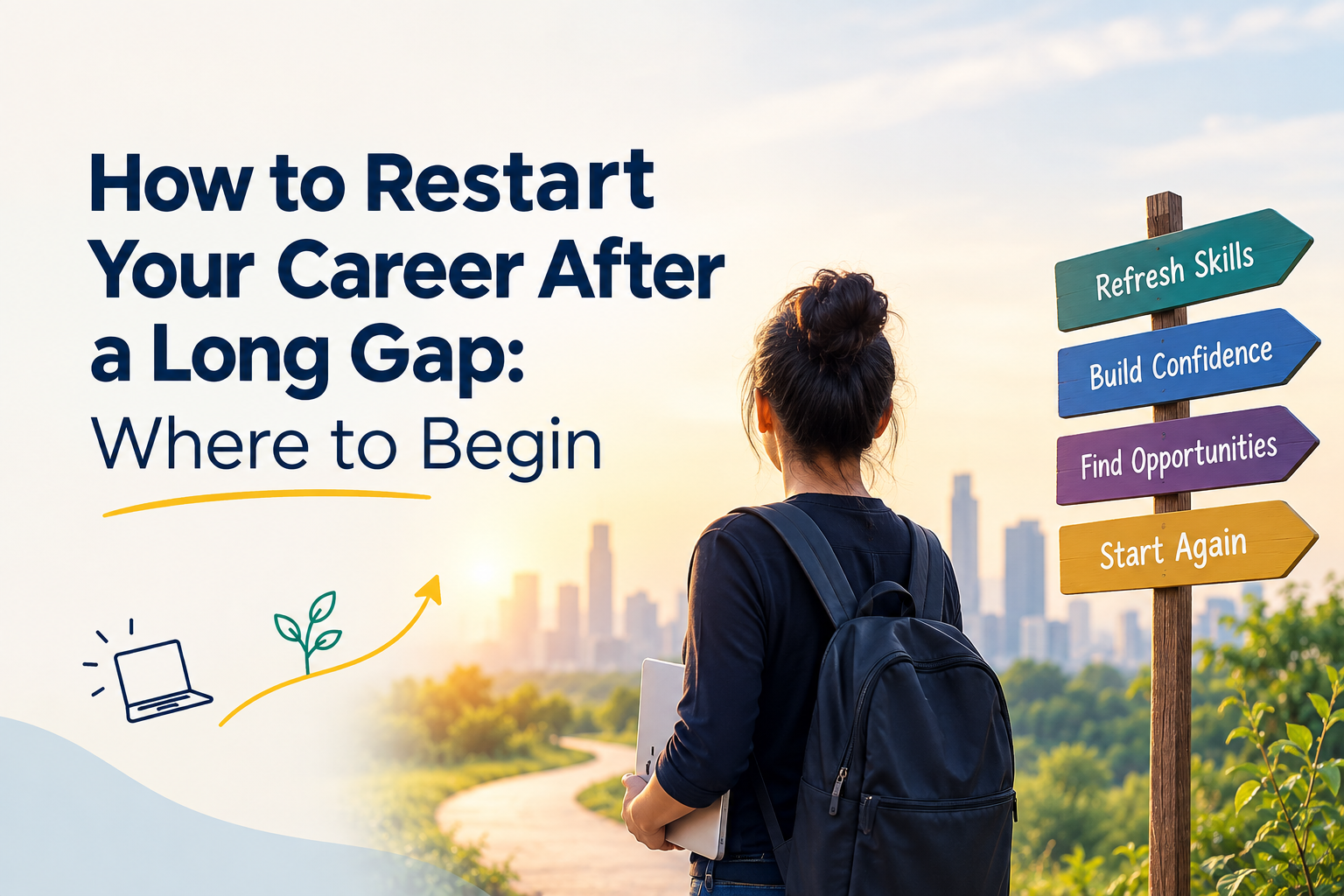
Taking a career break is more common than ever. Whether it was due to parenthood, higher education, health, caregiving, relocation, personal commitments, or entrepreneurship, a career gap doesn't define your future.
The real challenge isn't the gap itself—it's knowing how to restart with confidence.
If you're wondering where to begin, this guide will help you rebuild your career one step at a time.
Why Career Gaps Are No Longer a Deal Breaker
Many companies now understand that careers aren't always linear.
Employers increasingly value:
Skills
Adaptability
Problem-solving
Continuous learning
Practical experience
A well-prepared candidate with a career gap often stands out more than someone with outdated skills.
Step 1: Understand Why You Want to Return
Before applying for jobs, ask yourself:
Do I want to continue in my previous field?
Am I looking for a career change?
Do I want a full-time, part-time, freelance, or remote role?
What kind of work-life balance am I looking for?
Being clear about your goals makes every next step easier.
Step 2: Assess Your Current Skills
List everything you already know.
Include:
Technical skills
Industry knowledge
Software tools
Communication skills
Leadership experience
Project management
Client handling
Many of these skills remain valuable even after a career break.
Step 3: Identify Skill Gaps
Every industry changes.
Research current job descriptions and identify what's new.
Examples include:
AI tools
Data analysis
Digital marketing
Cloud computing
Cybersecurity
UI/UX design
Automation tools
Project management platforms
Focus on learning only the skills required for your target role.
Step 4: Update Your Knowledge
You don't always need another degree.
Start with:
Online certifications
Short-term courses
Industry webinars
Workshops
Professional communities
Practical projects
Learning consistently is more important than collecting certificates.
Step 5: Build Practical Experience Again
Employers appreciate evidence of your skills.
You can gain experience through:
Freelancing
Volunteer projects
Personal projects
Internships
Contract work
Open-source contributions (for technical roles)
A portfolio often speaks louder than a resume.
Step 6: Rewrite Your Resume
Instead of hiding your career gap:
Highlight your achievements.
Focus on measurable results.
Mention certifications.
Showcase recent projects.
Add a professional summary.
Explain your career break honestly if needed.
Keep the focus on what you can contribute today.
Step 7: Refresh Your LinkedIn Profile
Your LinkedIn profile should include:
Professional headline
Updated summary
New certifications
Recent projects
Skills
Recommendations
Professional photo
Recruiters often review LinkedIn before scheduling interviews.
Step 8: Prepare for Career Gap Interview Questions
Be honest and confident.
Instead of apologizing for your break, explain:
Why did you take the break?
What you learned during that time.
How you've updated your skills.
Why are you ready to return now?
Confidence matters more than having a perfect career timeline.
Step 9: Rebuild Your Professional Network
Networking can uncover opportunities that job boards don't.
Reconnect with:
Former colleagues
Managers
Alumni
Industry mentors
Professional groups
LinkedIn communities
Sometimes, one conversation leads to your next opportunity.
Step 10: Apply Strategically
Avoid sending hundreds of generic applications.
Instead:
Tailor your resume for each role.
Write personalized cover letters.
Research the company.
Practice interview questions.
Follow up professionally.
Quality applications often produce better results than quantity.
Common Mistakes to Avoid
Waiting until you feel "100% ready"
Hiding your career gap
Applying without updating your skills
Ignoring networking
Using an outdated resume
Comparing your journey with others
Remember, every career path is different.
Frequently Asked Questions (FAQ)
Is it difficult to get a job after a long career break?
Not necessarily. Many employers value candidates who demonstrate updated skills, relevant experience, and a positive attitude.
How do I explain a career gap in an interview?
Be honest, concise, and focus on what you learned during the break and how you've prepared to return to work.
Should I mention my career gap on my resume?
Yes. Avoid trying to hide it. Instead, emphasize your recent learning, certifications, projects, or freelance work.
Can I switch careers after a long gap?
Absolutely. A career break can be a good opportunity to transition into a field that better matches your interests and today's job market.
What skills should I learn before returning to work?
The answer depends on your industry, but digital literacy, AI tools, communication, project management, and data analysis are valuable across many roles.
A career break is a chapter—not the whole story.
What employers care about most is your willingness to learn, adapt, and contribute. By updating your skills, rebuilding your confidence, and taking consistent action, you can successfully restart your career.
The first application may feel challenging, but every step forward brings you closer to your next opportunity.
Your career isn't starting over—it's starting again with more experience, perspective, and purpose.